Tree topping is one of the most common requests we get. The reasons for topping a tree can seem understandable. A tree has gotten too tall, it’s blocking a view, or a homeowner is worried about it coming down in a storm. Topping feels like the logical solution. Cut it down to size and move on.
We get it. But before you make that call, here’s what topping actually does to a tree and why most certified arborists will strongly advise against it.
What Tree Topping Actually Does
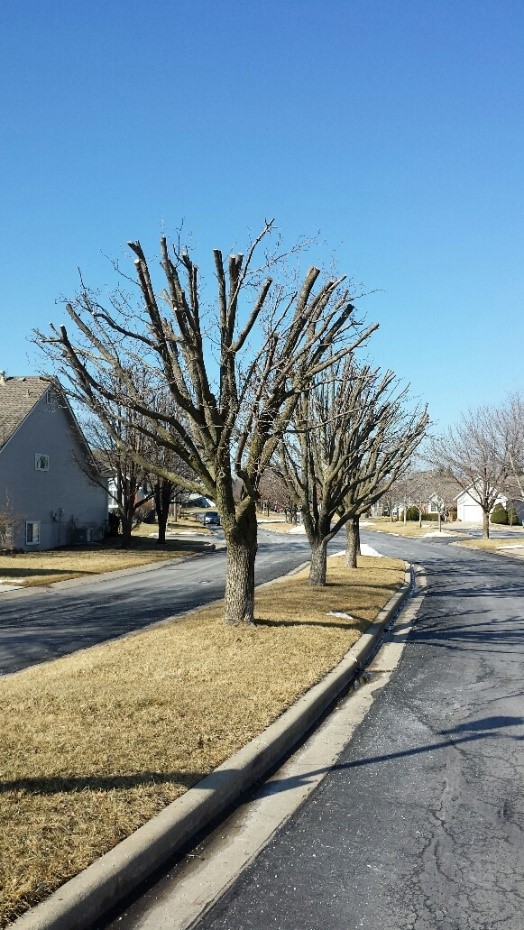
Topping means cutting the main trunk or large primary branches of a tree down to stubs. It dramatically reduces the height in a short amount of time, which is why it’s appealing. The problem is what happens after.
A topped tree goes into survival mode. It responds by pushing out a large volume of fast-growing, weakly attached shoots called water sprouts from the cut points. These shoots grow fast but they are structurally weak. They attach to the outer layer of the old wood rather than developing the strong unions that normal branches form over years of growth.
The result is a tree that looks fuller within a season or two but is actually more dangerous than it was before. Those fast-growing water sprouts are far more likely to fail in wind and snow than the original branches ever were. You’ve traded a tall tree for a hazardous one.
On top of that, the large cuts left by topping are extremely difficult for a tree to close over. That exposed wood becomes an entry point for disease, decay, and insects. According to the International Society of Arboriculture{target=”_blank”}, topping is one of the most harmful practices that can be inflicted on a tree and often leads to decline and death within a few years.
Why People Still Ask For It
Topping gets requested for a few common reasons:
- The tree has gotten too tall and feels threatening
- It’s blocking a view or too close to a structure
- A previous company topped it and now it needs to be done again to control the regrowth
- Someone saw a neighbor do it and assumed it was standard practice
All of these are real concerns. The issue is that topping addresses the symptom without solving the problem, and usually makes things worse in the long run.
What We Recommend Instead
Depending on what you’re actually trying to accomplish, there are better options:
Crown reduction brings the overall size of the tree down by selectively cutting branches back to lateral growth points. The tree keeps its natural shape, the cuts are smaller and heal properly, and you get a meaningfully smaller canopy without the structural damage that topping causes.
Crown thinning removes select branches from throughout the canopy to reduce density and wind resistance without dramatically changing the tree’s height or shape. This is often the right call for trees that feel threatening during storms.
Removal is sometimes the honest answer. If a tree has genuinely outgrown its space, is too close to a structure, or poses a real risk, removing it cleanly is a better long-term solution than repeated topping cycles that weaken it over time. Here’s what tree removal actually involves and what drives the cost.
Our Honest Policy on Topping
We will top a tree if a customer asks us to and understands what they’re getting into. That’s the customer’s property and their call to make.
But we will always have an honest conversation first. We’ll tell you what topping is likely to do to that specific tree, what the alternatives look like, and what you can expect down the road if you go that route. If you still want it topped after that conversation, we’ll do it. We just won’t be responsible for the future health of the tree.
Most of the time, once homeowners understand what’s actually happening, they want the better option.
Not Sure What Your Tree Actually Needs?
Start with a free estimate. We’ll walk your property, look at what you’re working with, and give you a straight answer on what we’d recommend and why. No pressure, no upsell, just honest tree advice from an ISA-certified, veteran-owned crew.
If you’re heading into fall and wondering whether your trees are healthy enough to make it through a Utah winter, here’s what to look for before the snow hits.
We serve homeowners across Salt Lake and Utah Counties, including Sandy, Draper, Lehi, South Jordan, American Fork, Alpine, Holladay, Murray, Provo, and the greater Wasatch Front. Flexible financing available through Wisetack{target=”_blank”}.